-
English (US)
Choose your country or region:
Europe
Asia - Australasia
Middle East - Africa

The Hach Flow product line has joined McCrometer Inc., another Veralto Water Quality Segment Operating Company (OpCo), focused on metering for municipal, industrial and agricultural customers. Visit the Frequently Asked Questions page to learn more.
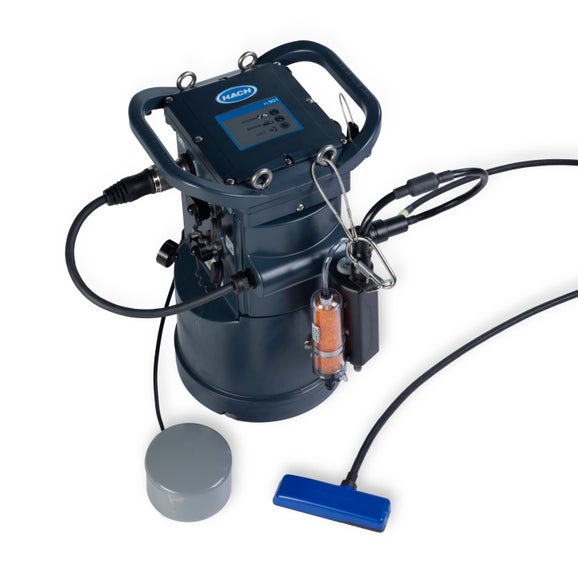
The FL1500 is the most agile Hach® flow monitoring solution for measuring and logging open channel flow, working with the largest selection of Hach sensors to accommodate even the most challenging sites and hydraulic conditions.

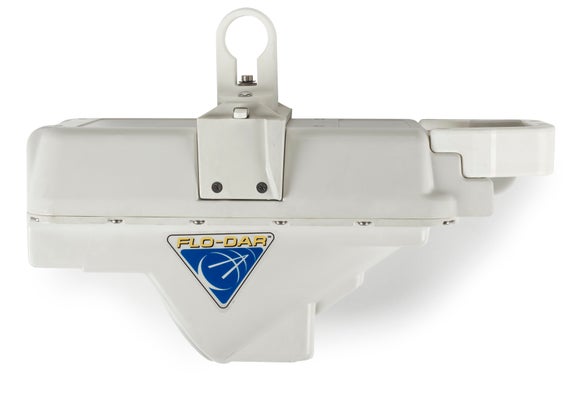
Using advanced digital Doppler radar velocity-sensing technology, along with ultrasonic level-sensing, the FLO-DAR revolutionizes open-channel flow monitoring by measuring from above the flow.
This means it can more effectively provide highly-accurate flow data under a wide range of challenging flow and site conditions, including sensor disturbances, high solids content, high temperature, shallow and caustic flows, large man-made channels, and high velocities of up to 20 ft/s, to name a few.
With Hach Data Delivery Services (DDS) you can stop spending all your time struggling just to get reliable flow data and instead start implementing projects that actually solve your wastewater flow challenges. Hach DDS is a highly efficient flow monitoring service where, for a fixed monthly fee, Hach Flow will provide the equipment, resources and support you need to acquire your flow data; with DDS you finally have options with how the service is structured. With programs that can be customized to solve your particular pain points — budget, technology, resources or hassle — Hach DDS is designed to empower you with smart data and let you leave the rest to us.
The FLO-DAR® AV Sensor provides an ideal solution for non-contact, maintenance-free portable or permanent sewer flow monitoring.

The Submerged AV Sensor is a robust, 1 MHz Acoustic Doppler flow sensor designed to measure wastewater with improved resistance to sensor fouling through either oil-filled or non-oil-filled options.

These state-of-the-art ultrasonic sensors are excellent non-contact flow monitoring solutions to use for both level measurement and alarming or as redundant level measurement with an area/velocity sensor.

The Hach BL9000 Bubble Level Sensor is as straightforward as it gets to measure water level. Designed to be a robust, reliable, and accurate sensor, the BL9000 includes simple tubing and bubble pressure, providing level measurements you can rely on.

The Rain Gauge Tipping Bucket is a simple yet highly accurate approach to capture rain event data and create a more accurate profile of your collection system.

Paired with the FH950 Handheld Flow Meter, the EM950 is a highly efficient way to profile rivers and streams, verify wastewater flow data, or identify ideal metering locations for wastewater flow monitoring.

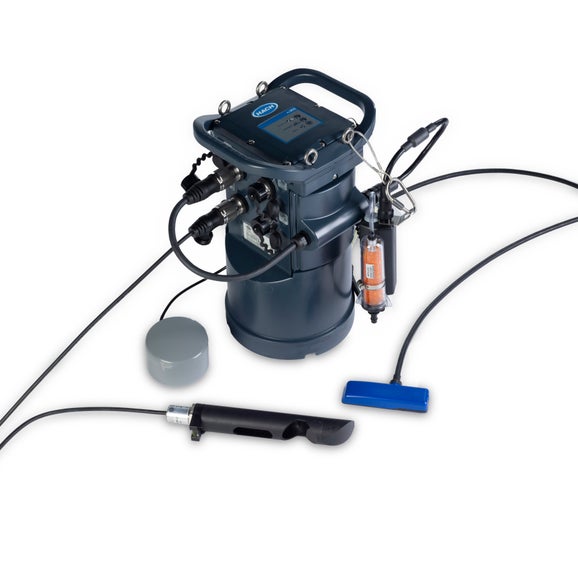
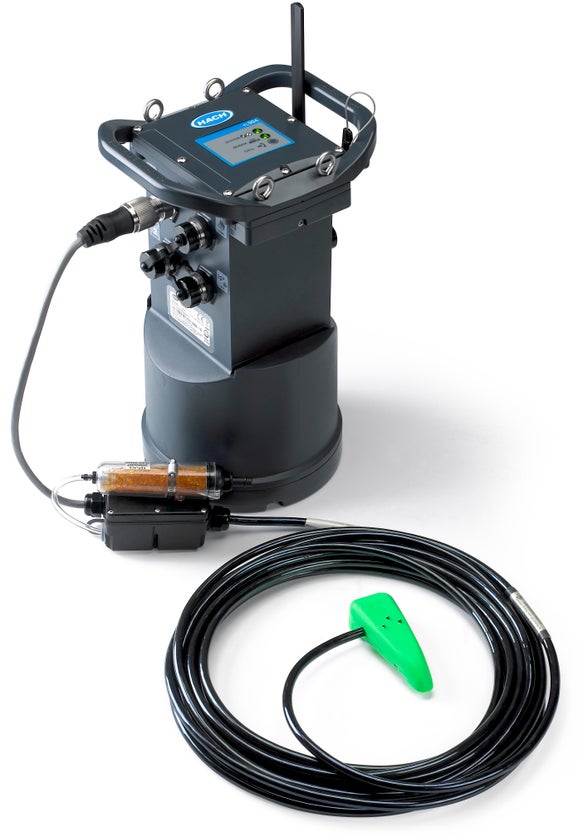
This multi-channel controller can handle up to four independent flow sensors. The FL1500 can also be paired with peripheral equipment such as a rain gauge, pH sensor, auto sampler, and mechanical totalizer.

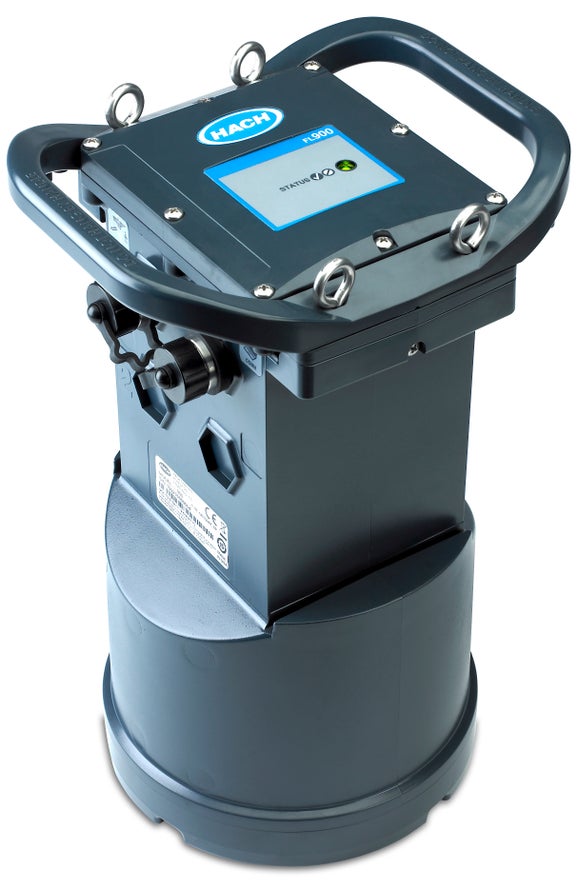
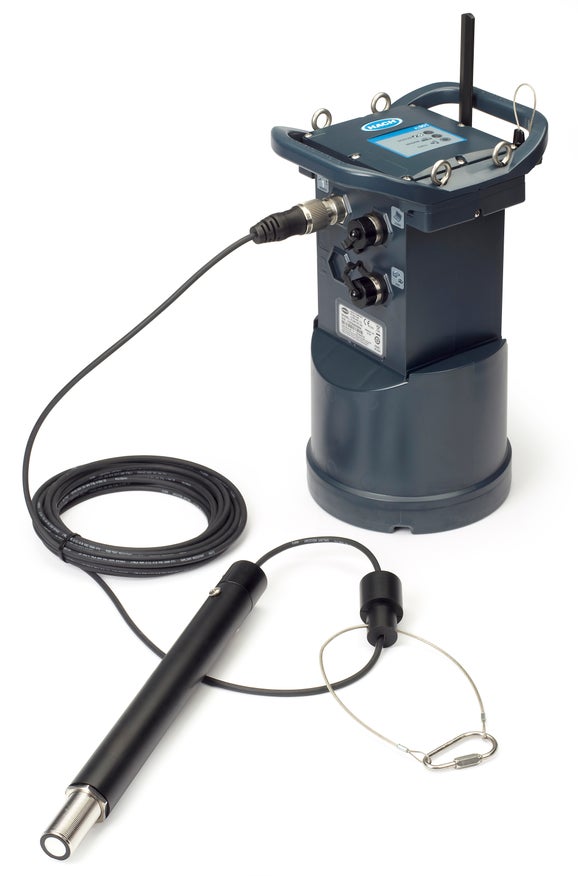
The Hach FL900 Series Flow Logger revolutionizes remote, open channel flow monitoring by providing rugged and reliable innovative solutions for any sewer flow measurement challenge.

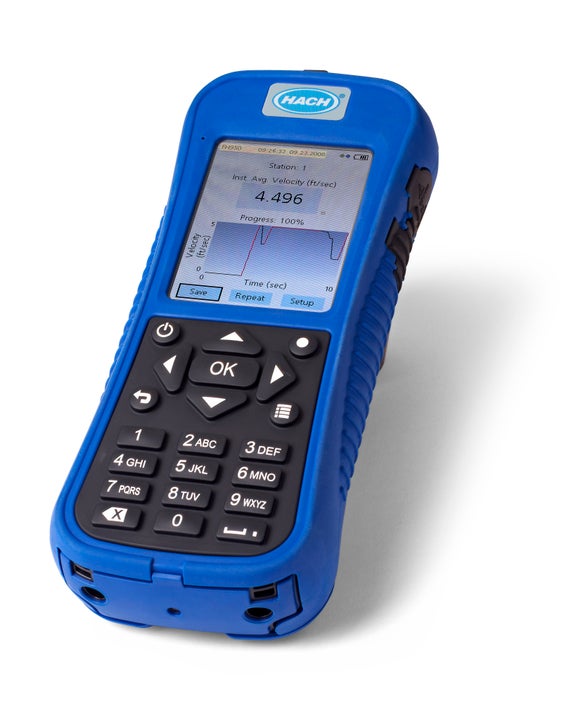
Hach's handheld, battery-powered FH950 Velocity & Depth Flow Meter was designed to provide accurate velocity and depth measurements while simplifying the entire measurement process in rugged field environments.

This system combines a Hach FL900 Series Flow Logger with AV9000 Analyzer Module, a Submerged AV Sensor, and a US9003 In-Pipe Ultrasonic Sensor to create a highly accurate level monitoring solution. In this configuration, level is captured by both a pressure transducer in the Sub AV sensor and with ultrasonic technology in the in-pipe sensor, dramatically limiting your risk of missing data.
We recognize that timely support is important to you. We have attempted to provide as many manuals and other support documents on our product pages and in Hach Support Online (HSO) as possible. Please follow the navigation links at the top to find the information you need.
If you have any specific questions about our products or services, please feel free to contact our Customer Service Department:
800.220.2279
951.652.3078
You may also complete an Information or Quote Request form.
Please note that telephone support is available Monday through Friday between 6:00 AM to 4:00 PM Mountain Time.
Contact us for tech support, service, sales, or to get a quote.